Most people would probably say that sheep are stupid. Nothing but a herd instinct with wool on.
But the people who study sheep are finding that they are very intelligent, even able to master tests that are used to measure human intelligence.
Sheep can not only recognize different plants, they can generalize about them and categorize them by family. This represents thinking beyond the "here and now" that we're told dominates animal thought.
Sheep have been shown to recognize and remember many dozens of faces not only of other sheep, but of humans, too. Watch any animal-themed movie that uses multiple stand-ins for the star and you realize that most people can't distinguish between the faces of different animals.
Sheep can also memorize the routes through mazes (an ability that has many real-life benefits). And while rams fighting with each other may make for good video, they actually form long-term friendships and help their friends in fights. This article in New Scientist magazine also describes how sheep can master a test that it was previously thought only humans and primates could master, a test that requires such complex thinking that it is used to detect the onset of dementia.
What I would like to see, though, is proof of the reports that sheep have learned to lie down and roll over cattle grids that are meant to keep them fenced in. This would be a brilliant maneuver, but there's no video or photo of such a thing. Sheep can jump over 5 foot fences or even squeeze through gaps as small as 8 inches wide, but think what a YouTube sensation it would be if someone could record this rolling maneuver. I'm not saying it's impossible, but seeing it would remove any doubt.
Until that video shows up, here's one smart individual:
Friday, February 11, 2011


Thursday, February 03, 2011
History lesson, and a review of the book it came from.

 It is still being taught in universities that animals have no mind, no consciousness. Rene Descartes' despicable, insane notion that animals are nothing but "biological machines" has that deep a hold on our society.
What's interesting, though, is that if you look back before Descartes, back to early colonial America or Medieval Europe or before, you find that people not only believed that animals were conscious beings, they should be considered members of the community. This is most obviously evidenced by judicial trials in which animals, from termites to bears, were accused of committing crimes, from trespassing to murder. They were accorded equal rights under the law, and humans and animals could even be tried together as co-conspirators. Animals were assigned public defenders for these trials.
Underlying all this was the assumption that animals possessed rationality, free will, moral agency, motivation, and emotions.
Then came the "great" philosophers. Descartes took away animals' souls and minds. John Calvin declared that God made the world and its animals for the benefit of humans. John Locke declared animals were "perfect machines". The separation of man from the rest of the world became an unchallenged notion in our society.
Since you are reading this blog, I assume you know how wrong that notion of separateness is. I thought it was interesting to look back in time to when society at large did not have that idea. That history lesson comes from an essay by Jeffrey St. Clair that serves as the introduction to a new book called "Fear of the Animal Planet", by Jason Hribal.
The premise of Hribal's book is that when an animal "attack" makes the news, we should look for and consider the circumstances that led the animal to do that, that the animal was provoked in some way. I don't disagree with that idea; I already held it long before this book appeared.
The book itself is, unfortunately, not going to persuade anyone who doesn't already have that opinion. Most of the book is little more than a listing of various incidents at zoos and theme parks. Hribal doesn't provide the necessary details of what led up to each incident. He needed to provide definite sources and evidence, and he does not. This hurts his effort a great deal. He seems to work on the assumption that ALL zoos, and ALL theme parks, and ALL animal handlers are necessarily and inherently evil; and with this view, providing details becomes unnecessary. This is not the way to get people interested and involved.
The book overall is a slapdash production, which will also put people off. Besides missing details, wrong dates are given, the author rambles off in odd directions, and even falls into incoherency at times. A good editor would need more than one red pencil to take on this book.
Animal attacks make news. The idea that the animal was acting in self-defense or was goaded into such action does not make the news. Bringing the idea of animals as intelligent emotional creatures to the forefront of our societal thinking is a very vital necessity for them and for us. This would be a major paradigm shift, and it's going to take a better effort than what was put into this book.
The first three-quarters of Jeffrey St. Clair's introduction is actually the most compelling part of the book. Maybe he should take on the job of producing a second edition.
Tuesday, February 01, 2011
Bear Society
 Ben Kilham has a knack for bears. North American black bears, specifically. He loves them, he understands them, he spends many days with them each year, he has raised orphan cubs. Most importantly, he pays close attention to them.
By paying attention, he has come to know, and has described, bear society. Bears are social animals, he says, and have a complex society based on altruistic sharing of food. He knows at least some of their language and he has observed their interactions.
But while Ben Kilham may have a knack for bears, he does not have "scientific" credentials. So, those who do have such credentials feel free to ignore him and what he says. Never mind that what he says makes sense. Never mind that his observations are so thorough and astute that he discovered something that no scientist ever knew before: that bears have an olfactory organ in the roof of their mouths (similar to the Jacob's Organ in cats, for example).
What's incredible to me is that scientists cling to their conclusion that bears do not interact socially; that they are solitary animals. This is based on nothing more than the fact that no scientist has observed bears closely enough to notice their society. Anyone with any interest in logical thought knows that lack of evidence is not proof of anything. Science has jumped to a conclusion about bears' behavior based on lack of evidence.
Ben Kilham has the first-hand evidence, and it makes sense. Science tells us that many different animals live solitary lives, but I believe that if these animals were really and truly observed it would be discovered that they actually have complex societies. Take tigers. "Everybody knows" that they live solitary lives in the wild. But they are extremely difficult to observe in the wild and of necessity have extremely large ranges. They have a complex vocal language, they get along well with each other in captivity--why should anyone conclude that they do not naturally have their own society?
Thankfully, Ben Kilham is not daunted. He is willing to give lectures on what he has learned about bears. He continues to observe, and film, and write about them. He's doing what he can to improve the world's knowledge of bears. Let's hope science one day will decide to pay attention.
Ben Kilham has his own site at benkilham.com.
Sunday, January 16, 2011
Fox Hunting
The Reuters news agency reported that in the Republic of Belarus, a wounded fox shot its would-be killer. The man tried to finish off the fox by beating it with the butt of his rifle, but the fox managed to pull the trigger, wounding the man in the leg. The hunter was hospitalized. No word on whether the fox sought treatment.
(Belarus is a country bordered by Russia, Ukraine, and Poland.)

(Belarus is a country bordered by Russia, Ukraine, and Poland.)

Wednesday, January 12, 2011
The Born Free Legacy
 If you have any interest at all in PBS's "Elsa's Legacy" (part of their "Nature" series), then you owe it to yourself to forget all about it and watch the BBC version of the same show, which is titled "The BORN FREE Legacy". The difference is beyond belief. Fortunately, some very nice person has placed the BBC version on YouTube, and I have placed all 4 parts of it below. The BBC got it right, and they even live up to the "legacy" aspect of the title. So far, only 339 people have watched it all the way through on YouTube; but this is the version of the show we should have been shown on PBS. Please watch and recommend this BBC show to everyone you know.
Part 1:
Part 2:
Part 3:
Part 4:
Monday, January 10, 2011
Elsa's Legacy
 PBS is running a show this week (the exact day depends on where you live) called "Elsa's Legacy", Elsa being the lion made famous by "Born Free".
I can't go on without giving a too-brief critique of the show. I have serious doubts about whether whoever wrote the script of the show (there is no writer credit given) ever saw the movie or read the book. Over and over, "Born Free" is referred to as a "fairy tale" and a "myth". Why? The writer seems to be of the opinion that "Born Free" presented some phony view of Elsa and the whole process she and the Adamsons went through in teaching her how to live in the African bush. The examples used to illustrate this point were, in actuality, all dealt with in both book and movie. I don't understand the cluelessness of the narration. (And very laughable was the picture used to illustrate the dangers of wild lions when they encounter an intruder: two lions mating.)
 They also mixed pictures of the lion Christian (ca. 1971) in with the recounting of the making of the movie "Born Free" (ca. 1965)--but I suppose one lion is interchangeable with any other to most people. This is all the more a shame since one of the points they hammer home is that "Born Free" was the first time anyone considered that animals were all individuals with unique personalities.
Naturally, it wasn't the first time anyone had that idea, but it may be that the movie "Born Free" brought that idea to more people than anything that came before. The show ends by asking the question, can we rekindle the passion for lions that the movie instilled in people?
 Strangely, given the show's title, they never really explore Elsa's legacy. And it is a great legacy. Not merely the Born Free Foundation but also the George Adamson Wild Animal Protection Trust (which was not mentioned). Many people are carrying on George Adamson's work in rehabilitating animals to a natural life, and not just lions. And there is the story of Christian the lion, which set the world on fire just a couple of years ago, and which would have turned out very, very differently had it not been for Elsa.
Elsa and the Adamsons have made a change in the world, and all for the better. The reaction to Christian's story shows that people can get passionate about lions, and "wild" animals, thus continuing the good that Elsa started.
 People need more opportunities to see more animals as they actually are, and observe their natures for themselves. I believe the passions will then arise naturally.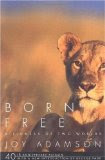


Wednesday, January 05, 2011
Life, and Consciousness, and Equivalency
I got to thinking about the physical sciences and our ingrained worldviews.
Physical sciences tell us that all there is is matter and energy (and Einstein told us that the two are actually the same).
Take carbon: Coal - Graphite - Diamonds - Whatever its appearance, no one will tell you that it is alive. Nor is oxygen. Carbon and oxygen do not willfully combine to form carbon monoxide or carbon dioxide, or anything else. The same things can be said for hydrogen, nitrogen, or whatever element you choose.
These elements are not alive, but put them together in the right combination and you get Life.
How does Life happen? There is no physical answer for that. But we know what Life is; we recognize when something is alive. Alive means consuming, growing, reacting, reproducing. And we have no problem allowing that a butterfly is just as alive as a human.
We also know what "consciousness" is (never mind philosophical attempts to obfuscate the idea). You know you are conscious, or else you wouldn't be translating the pixels on your screen into words and those words into concepts that I'm trying to communicate.
But for some reason society, and science, and religions all want to put a fence around consciousness, and not allow it to any other life, just humans. All those defining forces of our lives constantly beat this idea into our heads, that only humans have conscious intellect.
Yet, those people who have first-hand experience with animals know differently. They know that the animals they interact with are just as capable of thinking, feeling, and loving as they are. And yet the concept of a barrier between conscious and non-conscious life is so ingrained that it doesn't usually disappear completely, even for such people. The barrier gets stretched, pushed outward, to allow some animals in, but not all of them.
In his book Kinship with All Life , J. Allen Boone describes how he established a relationship with a house fly. He and the fly had a real responsive relationship. No one can reasonably deny that this is true--to do so would be to deny this man his own experiences when he gives no evidence of being other than intelligent, reasonable, and articulate. So to deny what he says about the fly and its ability to have a relationship with him would be to say that you know more about his life than he himself did, which is simply ridiculous.
 So if the barrier that allows consciousness can be stretched so far as to allow house flies into the exalted realm, surely by that point it must be stretched so thin as to fall apart completely.
In the light of all the experiential evidence that exists, would it not be more logical to assume that all forms of life have consciousness than to assume they don't?
Then why is the idea of the separateness of humans from the rest of nature so very difficult to shed?
Physical sciences tell us that all there is is matter and energy (and Einstein told us that the two are actually the same).
Take carbon: Coal - Graphite - Diamonds - Whatever its appearance, no one will tell you that it is alive. Nor is oxygen. Carbon and oxygen do not willfully combine to form carbon monoxide or carbon dioxide, or anything else. The same things can be said for hydrogen, nitrogen, or whatever element you choose.
These elements are not alive, but put them together in the right combination and you get Life.
How does Life happen? There is no physical answer for that. But we know what Life is; we recognize when something is alive. Alive means consuming, growing, reacting, reproducing. And we have no problem allowing that a butterfly is just as alive as a human.
We also know what "consciousness" is (never mind philosophical attempts to obfuscate the idea). You know you are conscious, or else you wouldn't be translating the pixels on your screen into words and those words into concepts that I'm trying to communicate.
But for some reason society, and science, and religions all want to put a fence around consciousness, and not allow it to any other life, just humans. All those defining forces of our lives constantly beat this idea into our heads, that only humans have conscious intellect.
Yet, those people who have first-hand experience with animals know differently. They know that the animals they interact with are just as capable of thinking, feeling, and loving as they are. And yet the concept of a barrier between conscious and non-conscious life is so ingrained that it doesn't usually disappear completely, even for such people. The barrier gets stretched, pushed outward, to allow some animals in, but not all of them.
In his book Kinship with All Life
, J. Allen Boone describes how he established a relationship with a house fly. He and the fly had a real responsive relationship. No one can reasonably deny that this is true--to do so would be to deny this man his own experiences when he gives no evidence of being other than intelligent, reasonable, and articulate. So to deny what he says about the fly and its ability to have a relationship with him would be to say that you know more about his life than he himself did, which is simply ridiculous. So if the barrier that allows consciousness can be stretched so far as to allow house flies into the exalted realm, surely by that point it must be stretched so thin as to fall apart completely.
In the light of all the experiential evidence that exists, would it not be more logical to assume that all forms of life have consciousness than to assume they don't?
Then why is the idea of the separateness of humans from the rest of nature so very difficult to shed?
Wednesday, December 29, 2010
A Most Divisive Animal
Name anything in the world, and you can find people that like it, and people that don't, but passions generally wouldn't run high. Not so with pigeons, however. For every person that is devoted to them, there seems to one who hates them with a passion, and such people seem to feel perfectly righteous in their hatred.
Probably the reason for such strong reactions is that pigeons are so very intelligent. And their intelligence allows them to adapt well to life in close proximity to humans.
Scientists are discovering just how intelligent pigeons are. Thanks to miniature GPS equipment, they can track the actions of a homing pigeon. The ability of a pigeon to find its way home has long been attributed to that magical catch-all, "instinct". But it has been observed that pigeons "scope out" the area in which they are released, so as to get their bearings and form a mental map. They find their way home by navigating according to landmarks, and if they are sent between the same two points repeatedly, they refine their route into the most efficient path home.
This explanation of pigeons mapping out their route is supported by tests that show that pigeons have a very good and long visual memory. Other senses are surely involved as well, but those are more difficult to measure. But it is obvious that real intelligence is involved, not some mythical "instinct".
Pigeons also have demonstrated real problem solving ability:
What I don't understand is the blind hatred of them. There's even a Facebook page for people who actively hate pigeons. It makes no sense.
Probably the reason for such strong reactions is that pigeons are so very intelligent. And their intelligence allows them to adapt well to life in close proximity to humans.
Scientists are discovering just how intelligent pigeons are. Thanks to miniature GPS equipment, they can track the actions of a homing pigeon. The ability of a pigeon to find its way home has long been attributed to that magical catch-all, "instinct". But it has been observed that pigeons "scope out" the area in which they are released, so as to get their bearings and form a mental map. They find their way home by navigating according to landmarks, and if they are sent between the same two points repeatedly, they refine their route into the most efficient path home.
This explanation of pigeons mapping out their route is supported by tests that show that pigeons have a very good and long visual memory. Other senses are surely involved as well, but those are more difficult to measure. But it is obvious that real intelligence is involved, not some mythical "instinct".
Pigeons also have demonstrated real problem solving ability:
What I don't understand is the blind hatred of them. There's even a Facebook page for people who actively hate pigeons. It makes no sense.
Monday, December 27, 2010
Wednesday, December 15, 2010
A Lioness and Her Cubs, and Their Friend
Time for another look in at Kevin Richardson, this time with some really tiny lion cubs:
This video is a joy from beginning to end. Not only are the cubs adorable:

but you can see how touchy-feely lions are. They love physical contact.
For the benefit of the cubs, mama comes with a toy: the tuft on the end of her tail:

And there's more scenes of happy quiet times together:


Happy is the lion family that snoozes together:

This video is a joy from beginning to end. Not only are the cubs adorable:

but you can see how touchy-feely lions are. They love physical contact.
For the benefit of the cubs, mama comes with a toy: the tuft on the end of her tail:

And there's more scenes of happy quiet times together:


Happy is the lion family that snoozes together:

Subscribe to:
Posts (Atom)


 Posts
Posts

